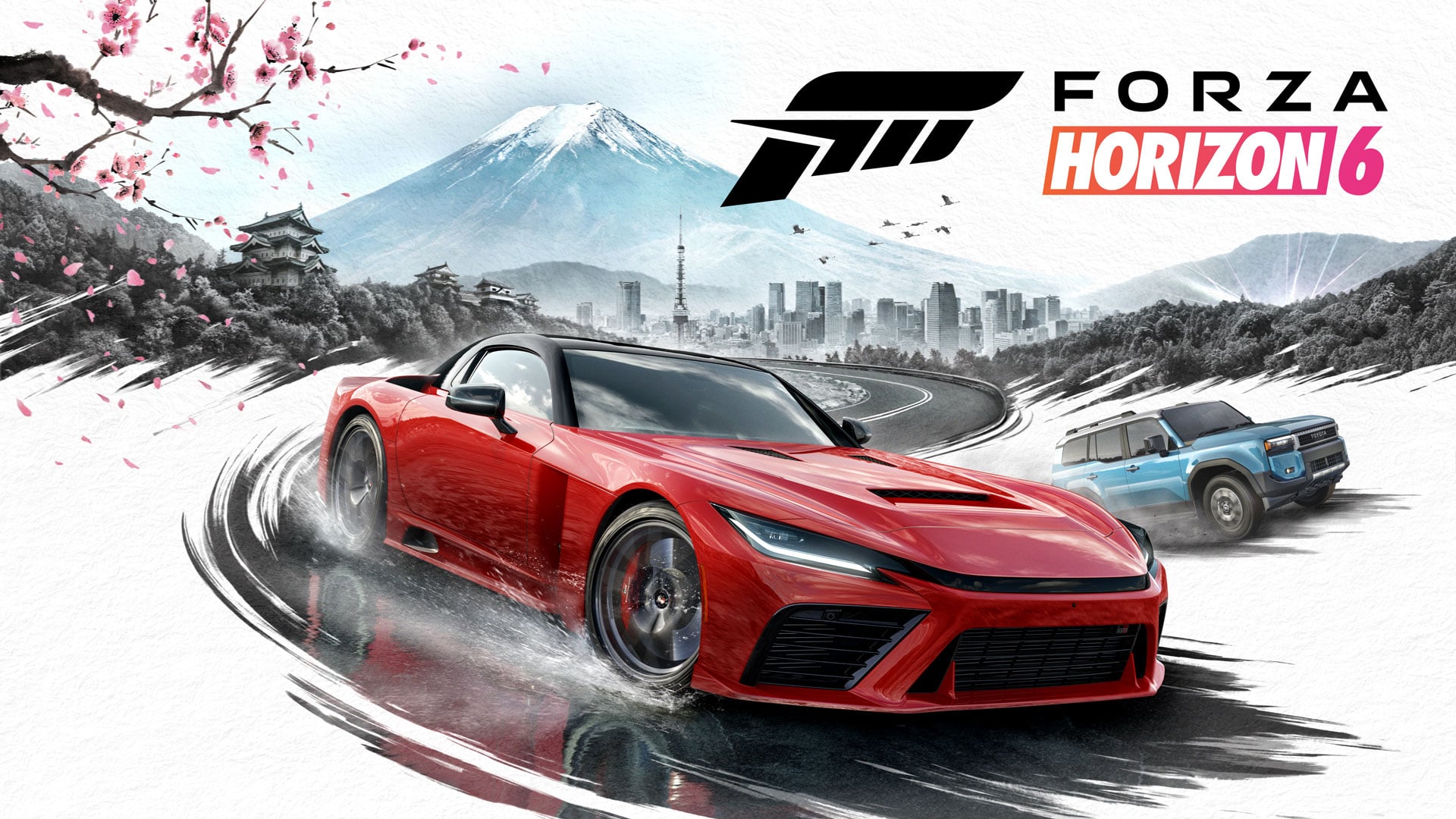
After the longest fallow spell in the series’ history, Forza Horizon is back with a new title that heads to a destination for which players have been clamoring since… well, the first game: Japan.
It’s tough to believe that Forza Horizon 5 is getting up on five years old at this point, especially given three solid years of support, and even the most recent entry in Forza as a whole — Forza Motorsport (2023) — is pretty close to three.
Forza Horizon 6 then lands just in time to reinvigorate interest in the Forza franchise, after a couple of bad years, and with a fan-service venue to boot. Playground Games has been making a lot of the right noises too, and even before the PlayStation 5 release the predecessor game had racked up 50m players.
With FH6 promising to be, once again, bigger and better, it’s just about guaranteed to be a hit. We’ve been tackling Horizon Japan to see if that’s the case, courtesy of a review code of the Premium Edition provided by Xbox.
Forza Horizon 6 arrives on Tuesday, May 19, on Xbox Series and PC, with Premium Edition players getting early access on Friday, May 15. A PlayStation 5 version will be available later in 2026.
Content and Value For Money

Once again, we have a Forza Horizon title launching with more cars than its predecessor did, though fewer than it ended up with, as something in the region of 550 cars are included on the day one roster. That number will doubtless expand over time, with new cars available each month on the Playlist (which is not yet available).
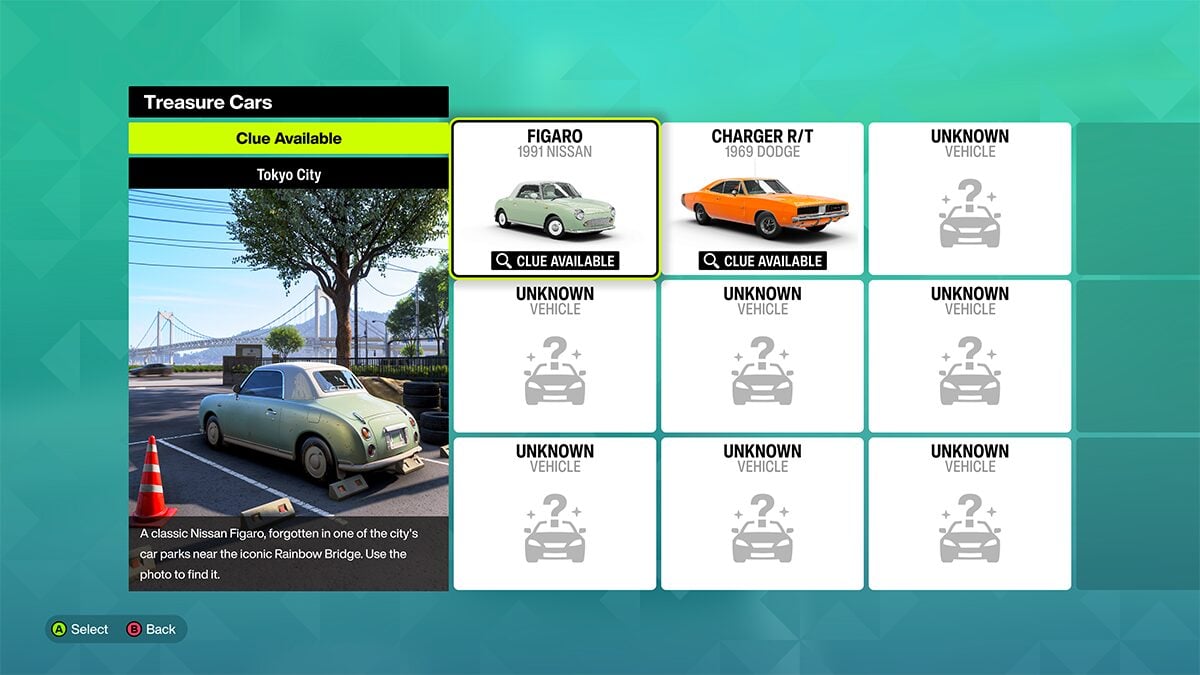
As with the previous games, the majority are available through the Autoshow at all times, with a variety of vehicles on offer through game progress or through discovery on the map; Barn Finds return, alongside a new discoverable type called Treasure Cars, and there’s discounted “Aftermarket” cars you can find on the streets too.
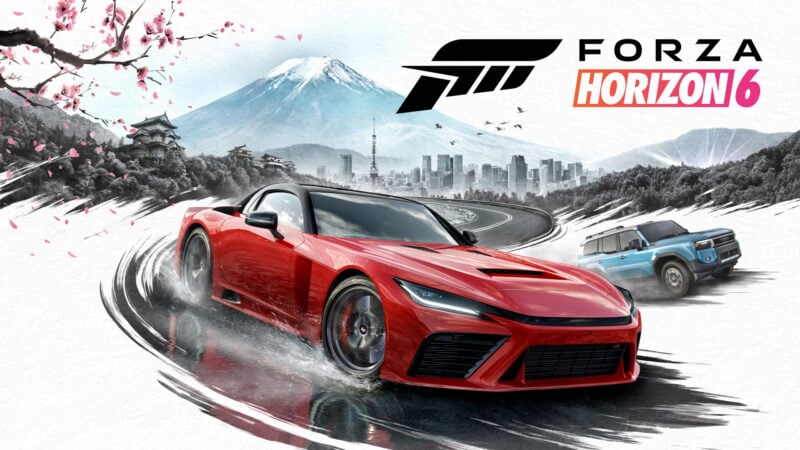
You’ll recognize a lot of the car list from previous titles, but there’s no shortage of new in there either. That obviously starts with the cover car, the prototype version of the GR GT that Toyota has been teasing for years and quite a coup considering the brand’s association with a certain other racing game series…
Indeed a lot of the new cars are from Japan and many of them aren’t quite so new in real terms either. FH5 perhaps suffered a bit from recreating the landscape of Mexico with only the smallest contribution to its car culture, but FH6 doesn’t make that same mistake. The addition of a kei-car category — Eclectic Domestics — ensures that one of the most endearing parts of Japan’s unique parc is part of the mix.
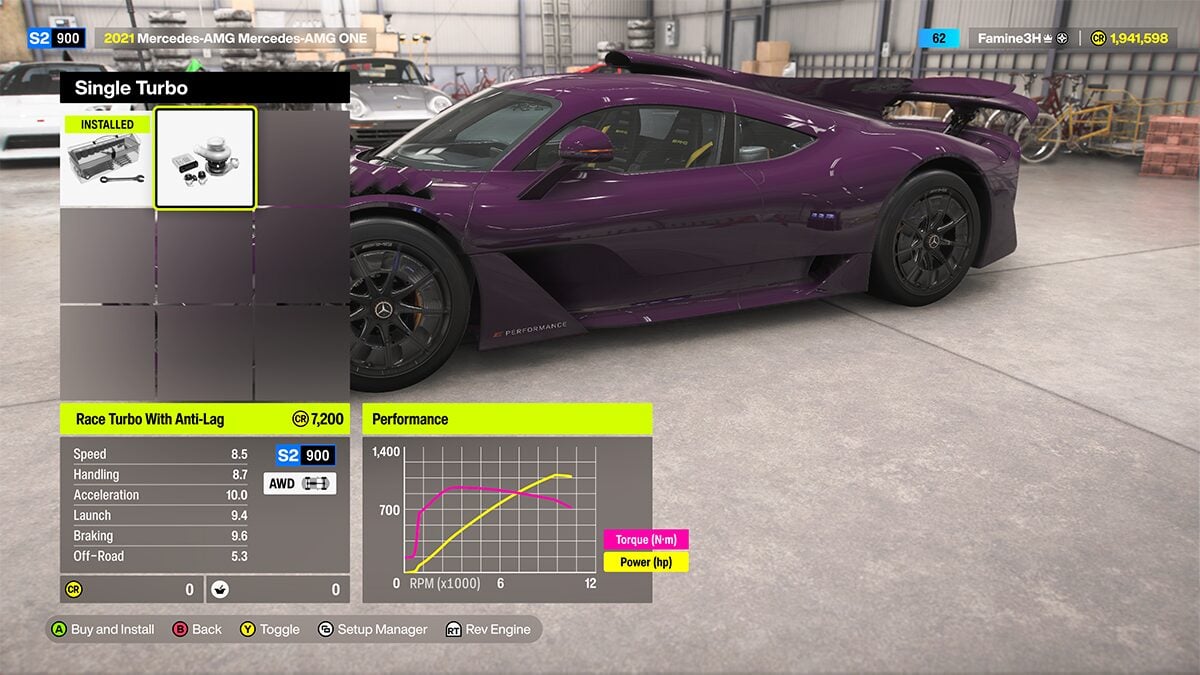
Each car of course has hundreds of tuning part options (not including wheels, which number well into the hundreds themselves) with engine swaps, drivetrain swaps, bodykits and aero accoutrements, new tire grades and of course the extensive livery editor.
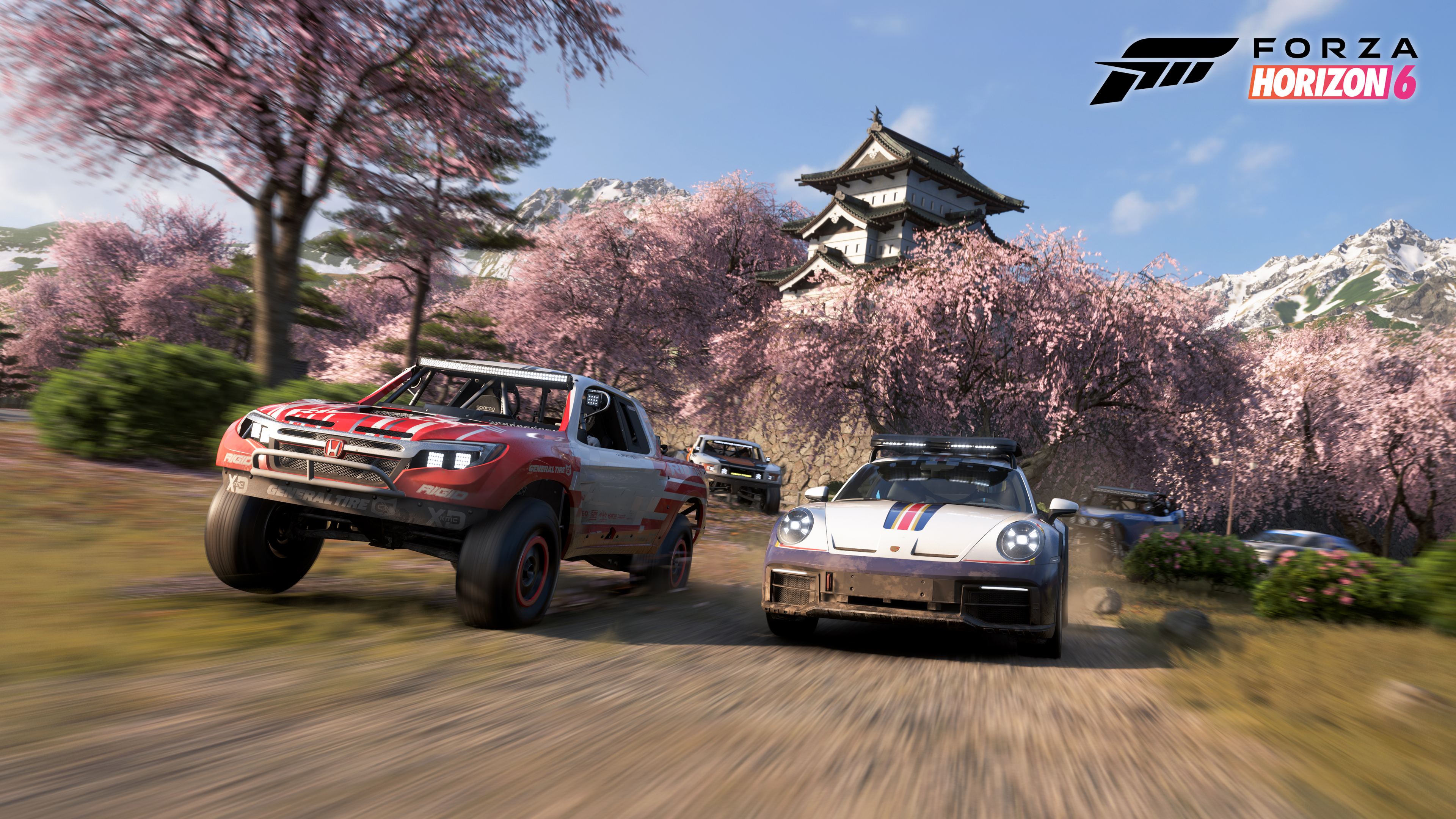
Speaking of the landscape, there’s no getting away from the fact that Japan — or at least this interpretation of a part of it — is stunning. Despite being appreciably larger than 5’s Mexico, there’s not the same sense of emptiness that the previous title could suffer from at times.
Even though we’re far from exploring the whole thing, there’s no part that doesn’t have something to do, see, collect, or photograph. That does mean that it’ll quickly become filled with brightly coloured icons, but that’s the Horizon way after all.
You’re still set the task of discovering all the roads and regions, but it’s made a little more obvious in FH6. There’s a “fog of war” effect applied both to the global map and your radar as you drive that clearly demarcates the explored and undiscovered areas, and while the game retains the grey/white/orange roadway system on the map we think it’s clearer this time round.
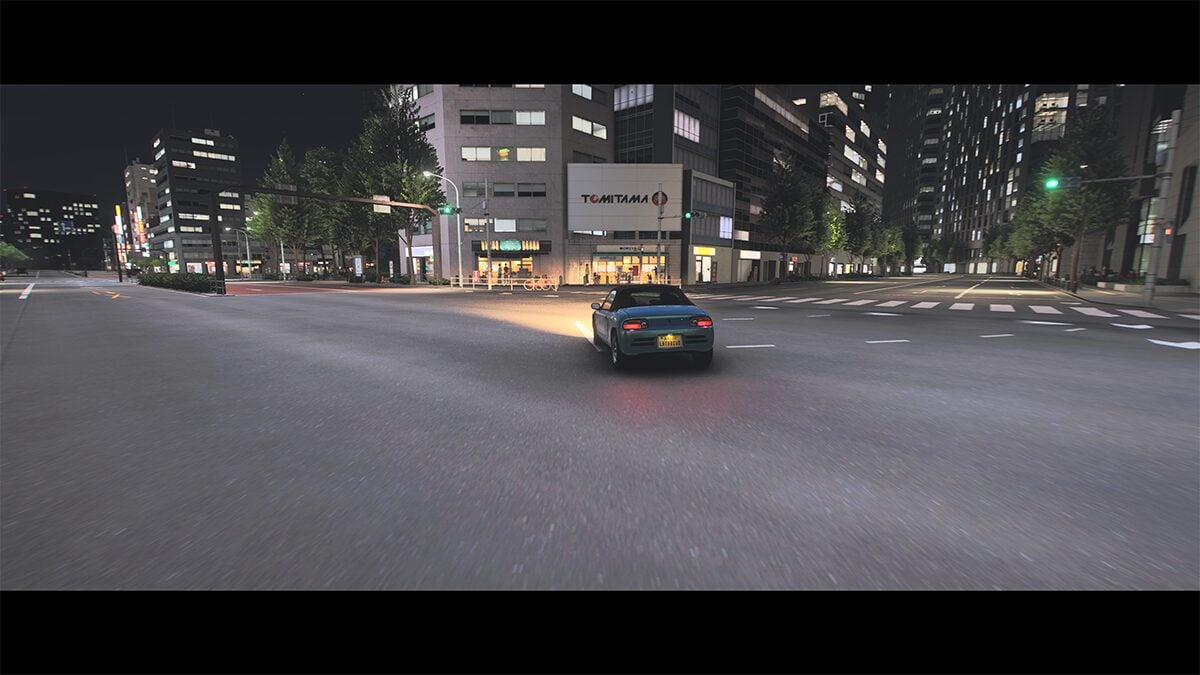
The game also still allows you to explore roads and map areas through the races and events themselves — other than in the opening “Prologue” spectacle — which is a nice timesaver. You can also put the new Autodrive feature into that bucket.
Pick a spot on the map, select it as your destination, and fire up the function through the ANNA menu. The game will drive you there in real time, and you can even select a cinematic camera to enjoy the trip as a spectacle. You can of course just Fast Travel, now available for free to any discovered road or location without having to smash any boards.
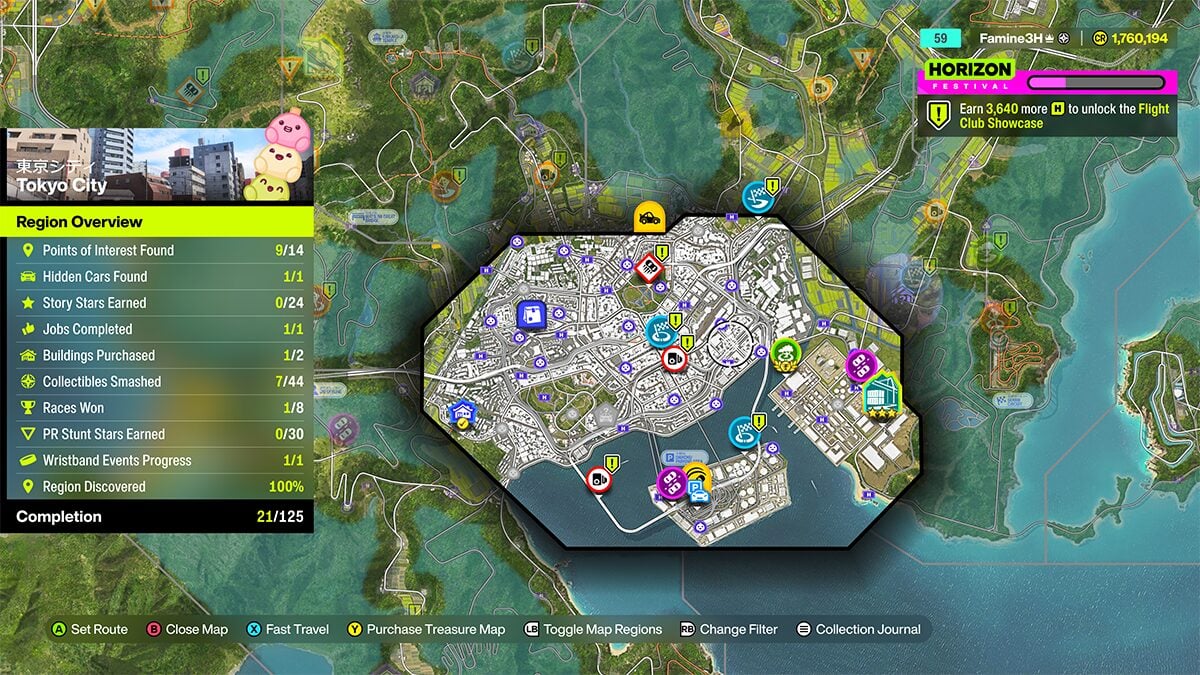
One new map feature is the Region display. This allows you to look at each of the nine regions (ten if you include Legends Island) individually and see what you’ve collected, found, driven, and explored within that area, simplifying the process of competing your goals.
A little step back from the previous title comes by way of the Horizon Festival site itself. In FH5 there were multiple locations to visit in order to buy (or sell) cars, which you’d unlock through the Expeditions. This isn’t replicated in FH6, with only one site initially available. Spoiler alert, there’s a second on Legends Island.
There is so much to do too, and it does become pretty overwhelming as it arrives at you thick and fast and you find yourself doing what amounts to sidequests.
As well as all of the race and stunt types from the previous two titles coming back there’s new Story missions (now with a skip option for repeat attempts, yay) and a new event type with multiple small circuits dotted around the map for Time Attack.
These and the Horizon Rush gateway events include a split-time feature and, for races against other players, a gap-to-leader timing by default. We do wish this was available against the AI, as it still seems like a feature a racing game should have within any race… Update: A tip from GTPlanet member BGreenFace sent us scurrying to the options menu, as it turns out split times can be toggled on game-wide.
The usual bonus boards return, with some high-value ones sitting in ludicrous places like atop a space rocket assembly building, and each region now has its own cutesy food and drink-based mascots to smash.
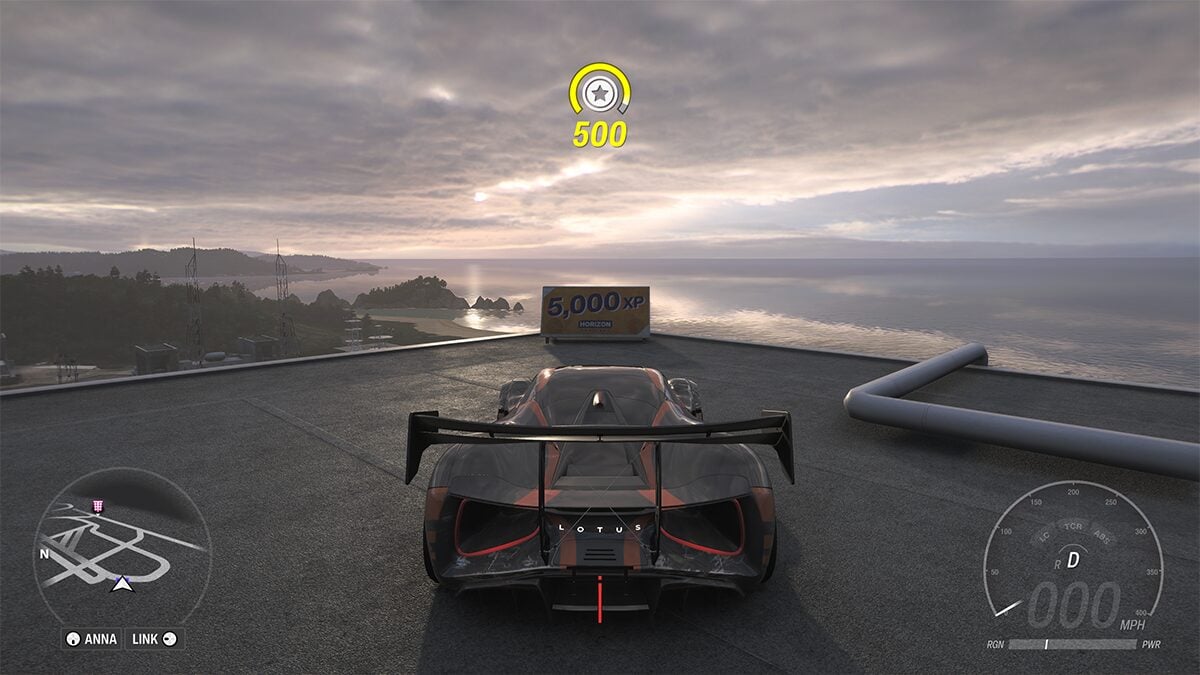
Everything feeds into one of three progression pathways, the third of which is in the Online Features section below, as you move from a newbie to the Festival and tourist in the nation up to the top levels.
Races and Stunts level up your Horizon Festival rank, offering access to the (still woefully scripted) Showcase events and the aforementioned Rush events to receive new wristbands to race faster cars.
Discovering things, collecting cars, tuning, and Stories all rank you up in Discover Japan, for which you get stamps in your collector book. This unlocks new player houses for purchase, each with boosts to your gameplay, including the sprawling Estate.
You can customize every garage in your player houses, with props and up to three cars (once you’ve picked up the mountain lodge), to give it just about any look you like.
That all pales next to The Estate, which is basically a 200-acre (nearly a full square kilometer) of land onto which you can place anything you like. It’s essentially EventLab Island but with a purpose and lore and we can see a lot of players spending a lot of time here.
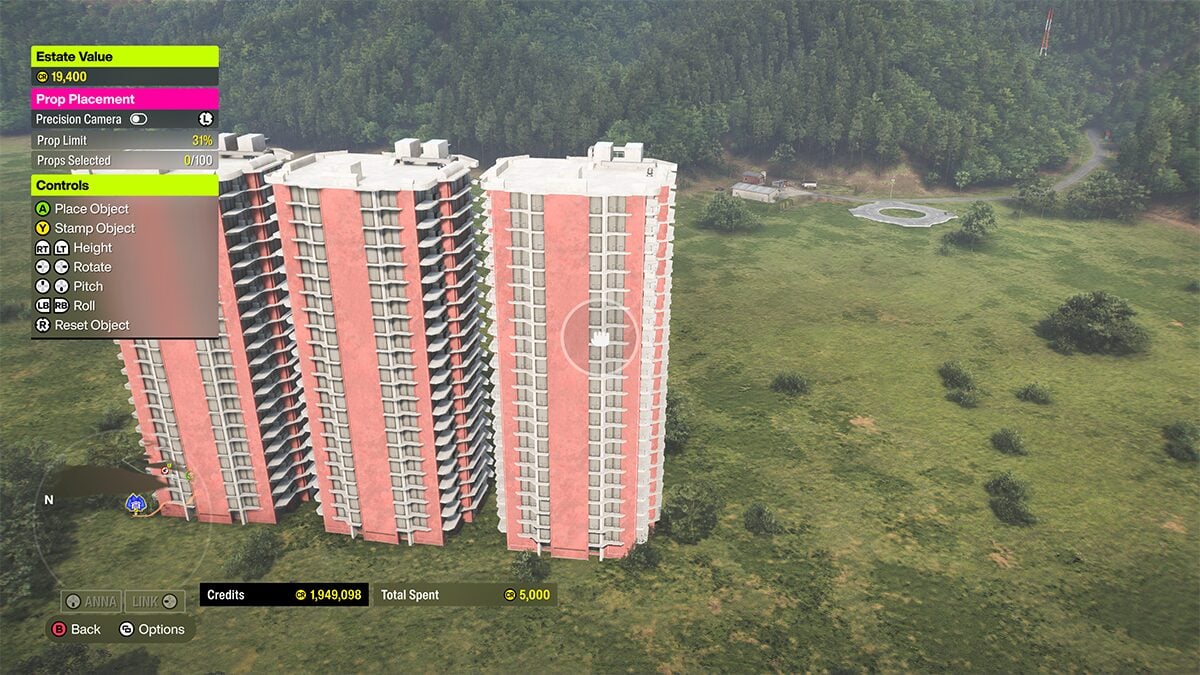
Building off that, EventLab itself now allows you to create any kind of course or challenge anywhere on the map, no longer bound to “start points”. You can also create collaboratively, in both EventLab and your Estate, cutting down time if there’s several of you with plans. Or increasing it, as typical group projects go.
We’re quite sure we’ve missed something, because Forza Horizon 6 is a lot. Suffice to say if it’s four and a half years to the next game in the series, you probably won’t get bored even if you can rattle through the whole wristband thing in a day. Unless you get distracted by sidequests…
Online Features
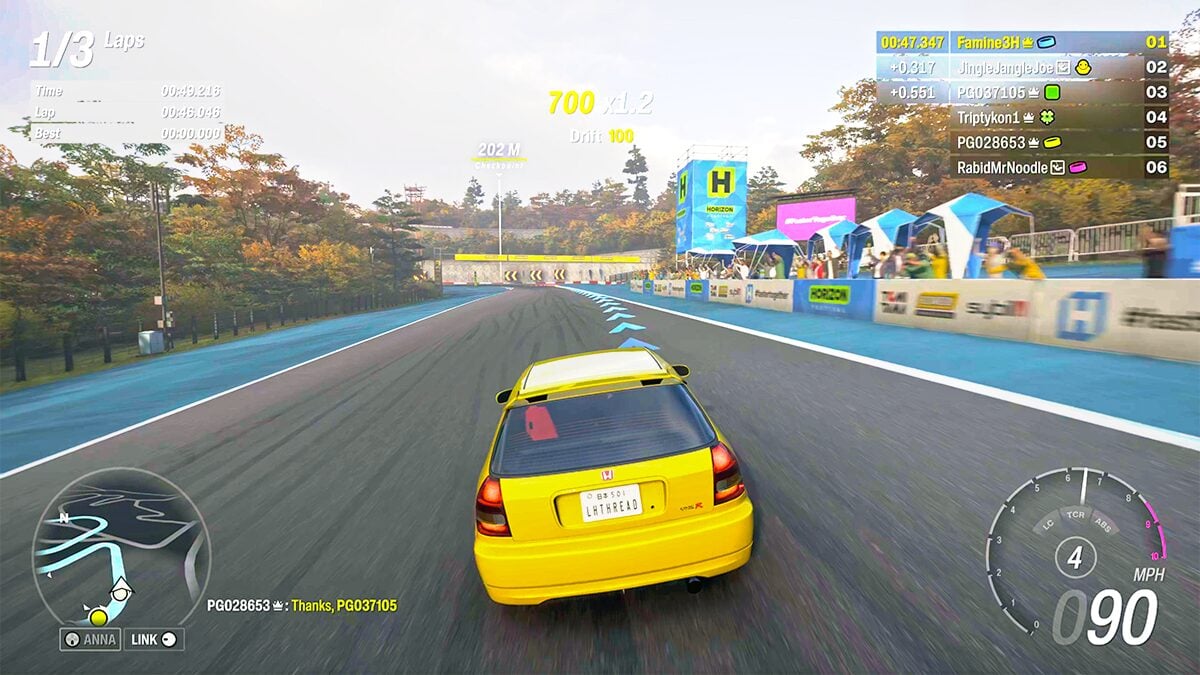
Excluding the above regarding the “CoLab” feature, we can largely reiterate what we said in our Forza Horizon 5 review all those years ago. So long as you’re subscribed to one of the multiplayer Xbox pass tiers, there is always something going on that you can take part in — though there have been a few little changes.
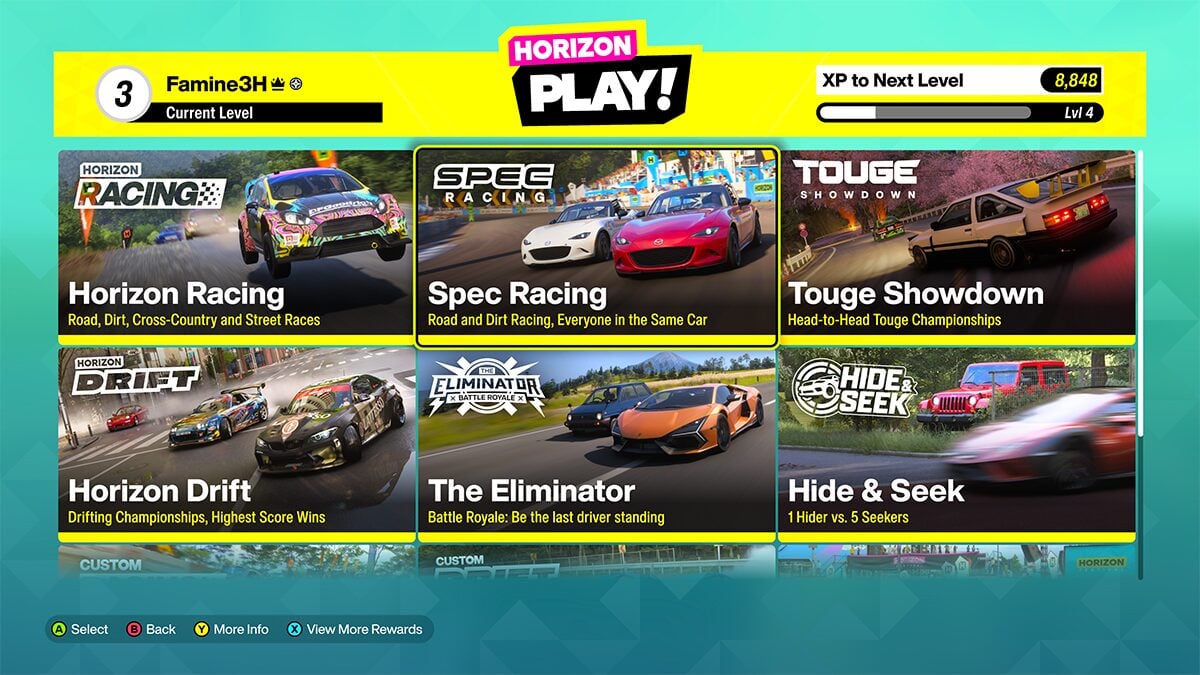
Horizon Open, itself a rename from FH4, is now called Horizon Play, and folds almost all of the multiplayer action into one place. You can select any event type directly from this menu — including The Eliminator (good news: almost all trees in Japan are now destructible) and Hide & Seek — and jump into a race.
One particularly interesting new mode is Spec Racing, which places every player into the same car for a series of three races. That removes any consideration of killer tunes from your racing and truly generates bragging rights. However we’ve not yet seen Horizon Tour — with players driving point-to-point between races — or, curiously, Playground Games.
There’s also a new Series Champions leaderboard feature. Your successes are logged here, showing off who’s the top driver in any given Series, with the leaderboards resetting every four weeks (or every Series).
Convoys return, allowing you to party up with other players and participate in any of the Play events with your convoy. A rejig of the menus also allows you to see who from your friends list is online directly from the Online tab without delving any further.
Alongside that there’s Horizon Stunt Party, which looks to be a new name for Horizon Arcade. This pops up at the top of every hour, at certain spots of the map, and brings you into a collaborative play mode where you all try to rack up certain skill types. We’ve only seen the Chaos (random stuff) and Speed (speed traps, speed zones, speed skills) events, but we’re going to assume the other types from FH5 — Air, Drift, and Wreckage — will also be back.
Finally there’s the Car Meets, which allow you to gather with other players, park up, show off your cars, and party up if you so wish.
All of your online shenanigans feed into the third Horizon Play progression path, awarding Badges and ranking points towards your Horizon Festival progress too.
While there was a multiplayer test session that we took part in with no issue, the only players online were media, influencers, and developers. That said we’ve never had a particular issue with Forza Horizon’s servers, so a Solar Crown-type debacle is the very last thing we’d expect.
Driving Physics and Handling

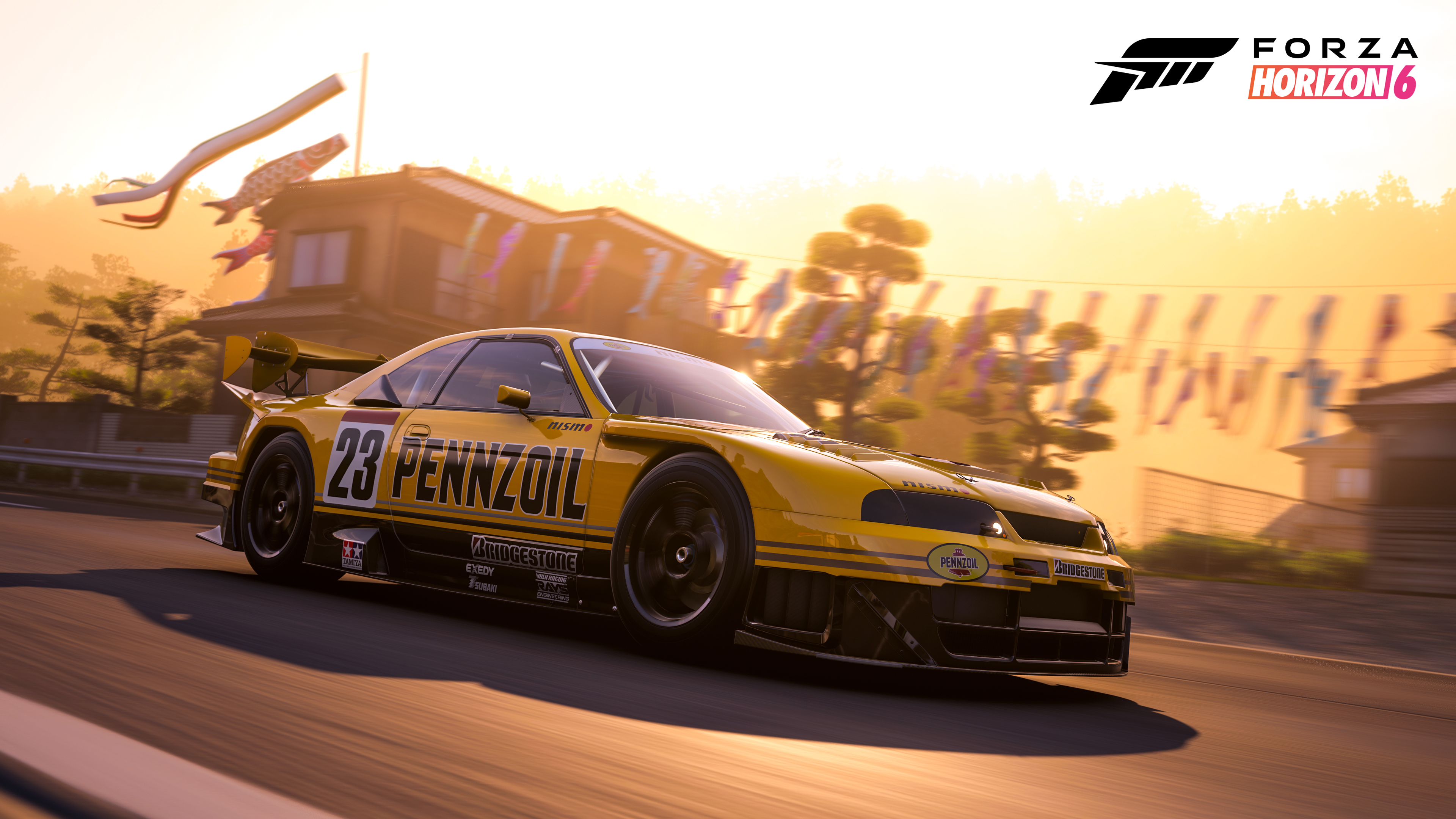
It’s always incredibly difficult to judge an FH title in entirely objective terms when it comes to this, as it’s somewhere between a serious arcade title and a light-hearted simulation.
Ultimately the purpose of FH6 is to have a great deal of fun, and a lot of the time that means doing things that would destroy your car and cause terminal harm to yourself and bystanders. Key features include driving through endless fences and trees, and leaping a car a third of a mile at over 200mph from several hundred feet up.
Full simulation physics would naturally make that a bad experience. FH6 also retains the damage model from previous titles, which is to say visual-only and with no amount of absolute carnage causing even the slightest perturbation in vehicle handling. You’d have thought smashing your rear wing off would affect rear downforce, but…
Still, the depth of settings available puts some more serious simulators to shame, essentially being the same as Forza Motorsport’s options and — whatever your opinion on that game’s driving manners — giving FH6 quite some depth. The settings changes have quite authentic effects on how your car handles, as do the different surfaces.
There is of course only a relatively low limit to how your car copes with the different surfaces and, despite the various tire options, you can drive pretty much anything pretty much anywhere depending on grade. It is hugely obvious when you’re driving up a snow bank on snow tires than on drag tires, but you can, to a point, do it nonetheless.
In essence the cars do all drive in a realistic fashion to within a couple of significant figures, and the various settings tweaks do exactly what you’d expect but it’s dialled back with accessibility aforethought.
That also applies to your control method. It doesn’t look like Playground Games has made major tweaks to how the game handles on your steering wheel, although with a bit of fine-tuning this might improve and you can certainly enjoy your time if that’s what you want to go with. The default controller remains more than good enough, and while we think that there’s a little more input damping on the steering action having played back-to-back with FH5 it’s not significant.
Graphics

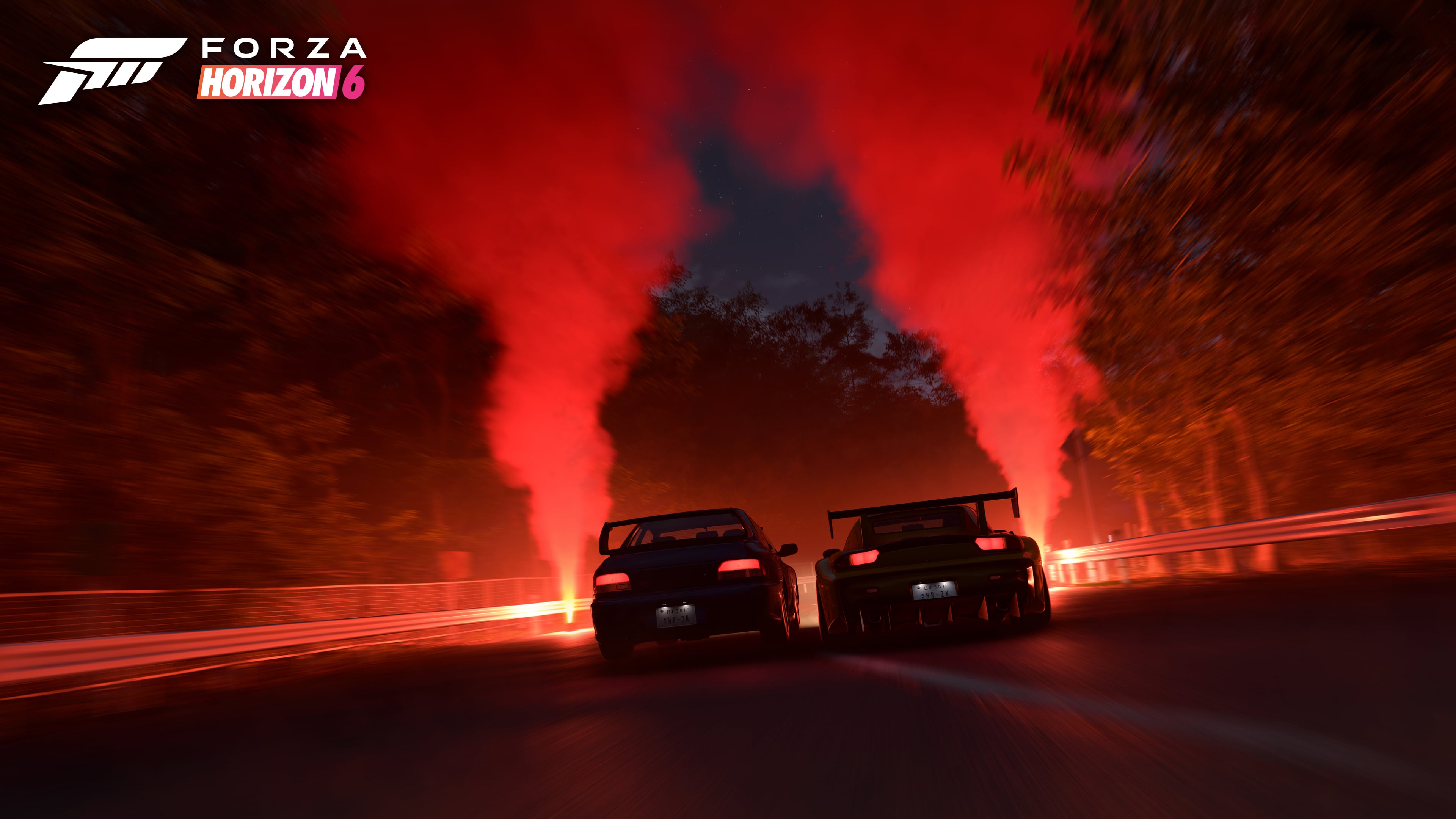
FH6 remains just as pretty as ever, with the vibrancy of the environment showing off the engine at its best and perhaps just about, on Xbox Series X, at its limits.
We’ll dispense with the Quality mode right away. This is capped at 30fps and is like driving in soup; even if the graphics are a “higher fidelity”, the experience is not particularly pleasant. We’d much rather the 60fps Performance mode, though it does get a little rough around the edges — quite literally — at times.
If you keep an eye on the very furthest reaches of your screen you can see effects like shadows and reflections popping in and out from time to time (usually at lower speeds), but we reckon there’s quite an improvement in draw distances and LOD transitions on things like foliage at pace. It was far more obvious in FH5, where you do now have to be going pretty quickly over rough terrain to see it here.
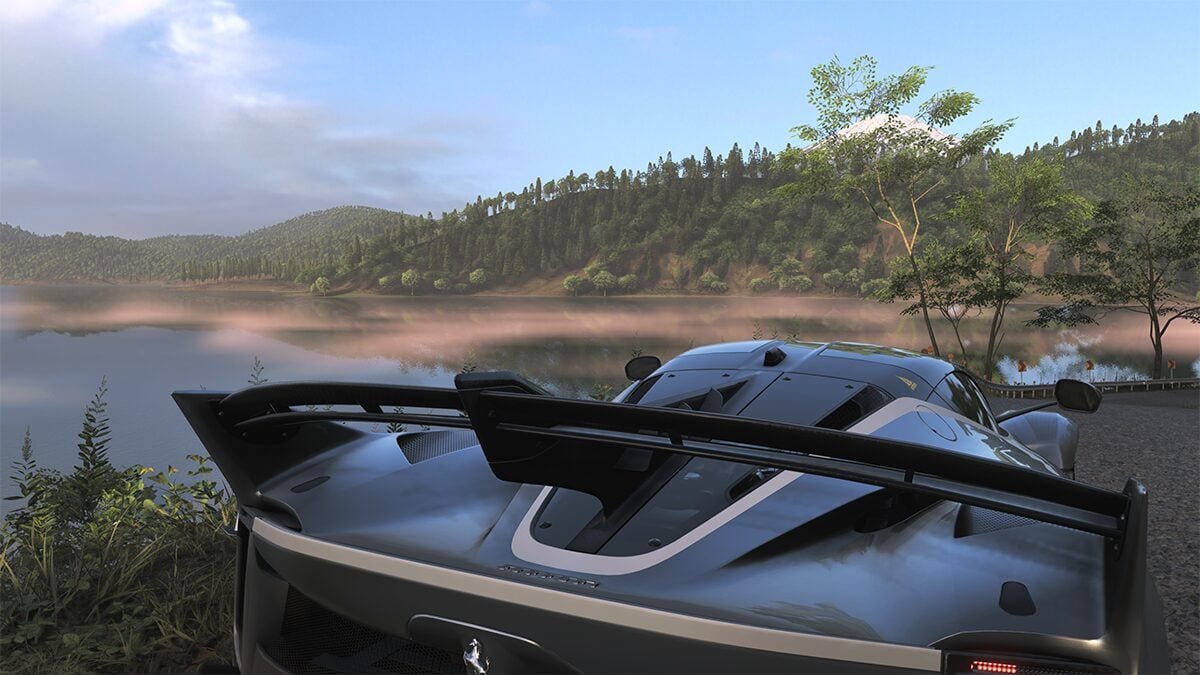
There’s a step up in several effects too, with some lovely ground fog clinging to trees and sea frets (well… lake frets) over what we think is the game’s equivalent of Lake Ashi. Tire smoke, dust from dirt roads, and snow effects also seem improved, and the deeper snow seems to borrow the terrain deformation from FH5’s Rally Adventure DLC.
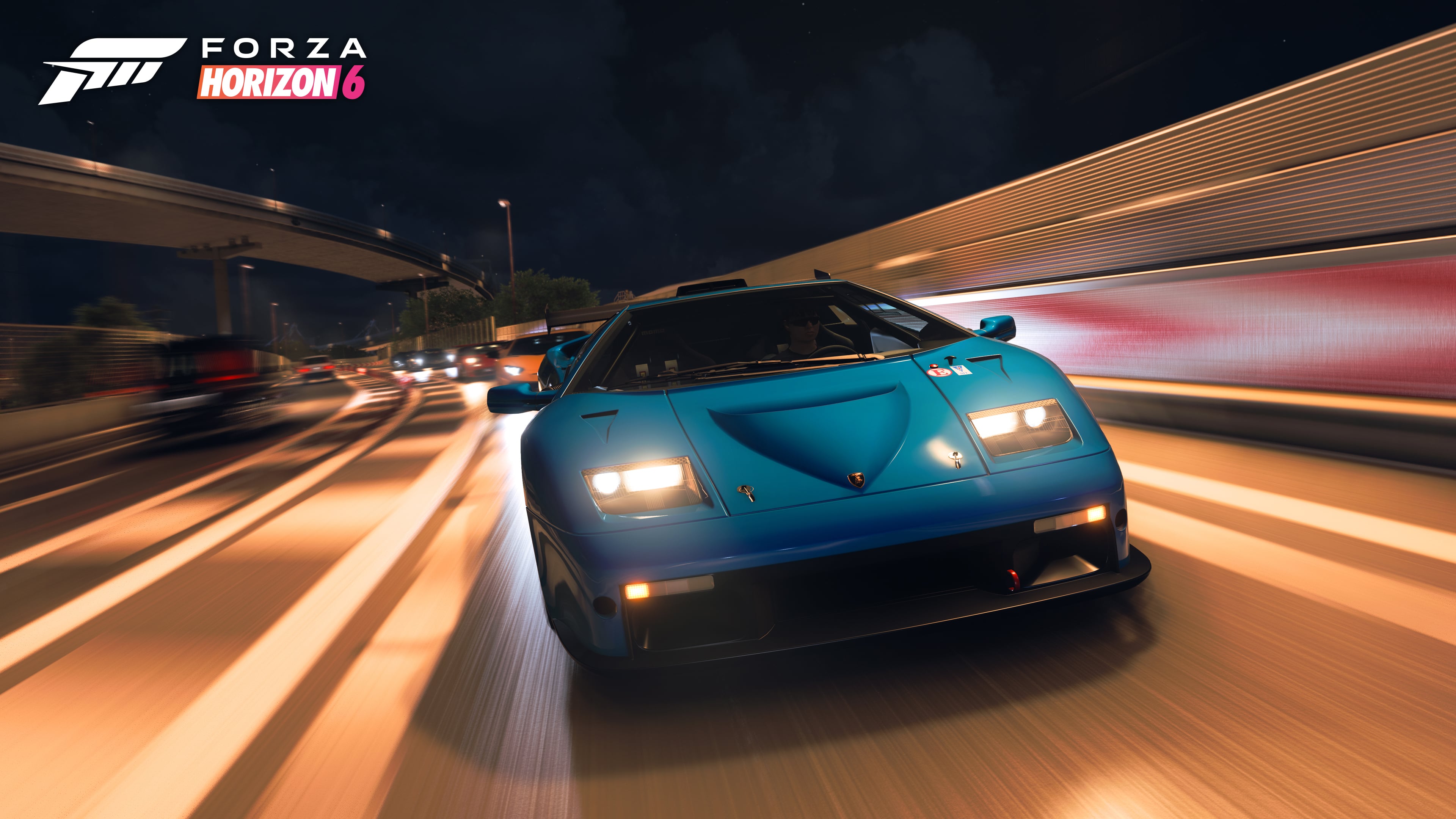
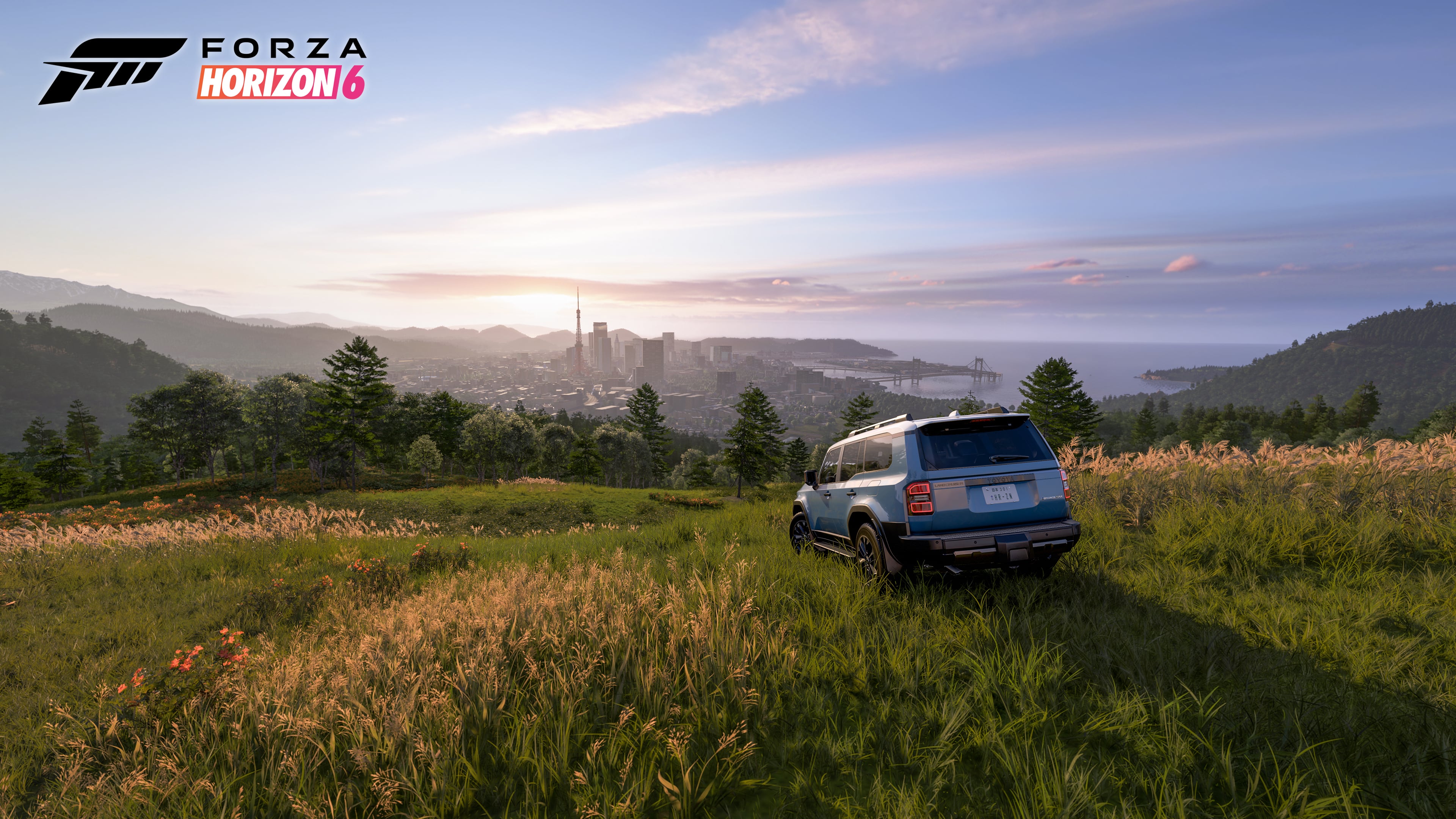
Japan itself is irredeemably pretty here, and Tokyo really does stand out as an environment. While it perhaps doesn’t have the traffic density of the real thing, by and large it’s pretty spectacular. Lighting improvements, particularly at night, lend even more atmosphere.
If you’re playing on ultimate settings on PC (if you’ve got one powerful enough!) you can probably round that half a star up. It’ll be extremely interesting to see how the PS5 Pro handles the game too, when it arrives.
We’ll also make note here of the UI changes. Some of the menus still baffle, but the reorganisation is an improvement and the new look and new typeface is a breath of fresh air.
Sound Design
A complete overhaul of the sound engine has stepped FH6 up above its predecessor, helped along by a rejig to the musical offerings too.
While we’ve never had a fundamental problem with any Forza Horizon title’s audio in general terms, there were some weak spots here and there which PG has addressed with the new Triton Acoustics system developed by Microsoft.
You can consider this a three-dimensional sound recreation system — essentially ray-tracing for noises — that better emulates how sound reflects off nearby surfaces. Combined with new recordings of a variety of vehicles, it’s a far better experience and not just in the sense of hearing what your own car’s various noisy parts are doing but to pick up where the cars around you are.
New sliders in the audio menu also allow you to adjust more effects than before, including low-frequency effects that give the game a beefier sound all round.
In general, music in games is a very particular taste, and while Horizon has always offered multiple radio stations to appeal to as broad an audience as possible our favorite station in both FH4 and FH5 was “off”. That’s not been the case with FH6 so far, which seems to have hit the mark a bit better — though we’re still missing an option to set a default station, often needing to cycle through when the game forces a particular channel on for certain circumstances.
All of the comedy horns are back too, and with friends, but we’d very much like it if the game would allow a “standard” option that played the car’s own original warning notes.
Our Verdict
Glancing back at what we said about Forza Horizon 5, our conclusion was that it was basically FH4 with all the features from all the expansions folded into the main game and set in a more interesting landscape, bar the change to the progression systems.
For the most part, that seems to be the case again here, and that doesn’t really come as a surprise since FH5 racked up 50 million players on Xbox, PC, and finally PlayStation. The recipe works, and PG has addressed quite a few of our minor gripes with FH5 while improving the graphics and audio and catering to the fans by finally setting it in Japan.
It’s still demonstrably a Horizon title, with everything happening relentlessly and messages all over the screen all the time rewarding you from virtually anything you do. However there’s plenty of improvements to the gameplay and UI, and the new garage customization and Estate features will keep players occupied for quite some time.
Of course there’s still more content to come by way of expansions and the expanding car roster, and we don’t doubt that there’s plenty in the pipeline to keep players busy for another four years — if FH7 takes that long…
Forza Horizon 6
The world of Horizon keeps on evolving, with another excellent entry that incrementally improves across the board.Learn more about how our rating system works.
Content and Value For Money
Launches with more of everything than any title before it, and new ways to make what you have your own.
Online Features
Reworked online modes provide better integration with the core game, CoLab has almost endless potential.
Driving Physics and Handling
Remains relatively realistic if generous at extremes by necessity.
Graphics
Visually impressive, with new and improved effects that perhaps test what the console can do. Avoid Quality mode on Xbox Series X.
Sound Design
A marked step up from its predecessor, and even the radio playlists seem to nail the brief this time round.